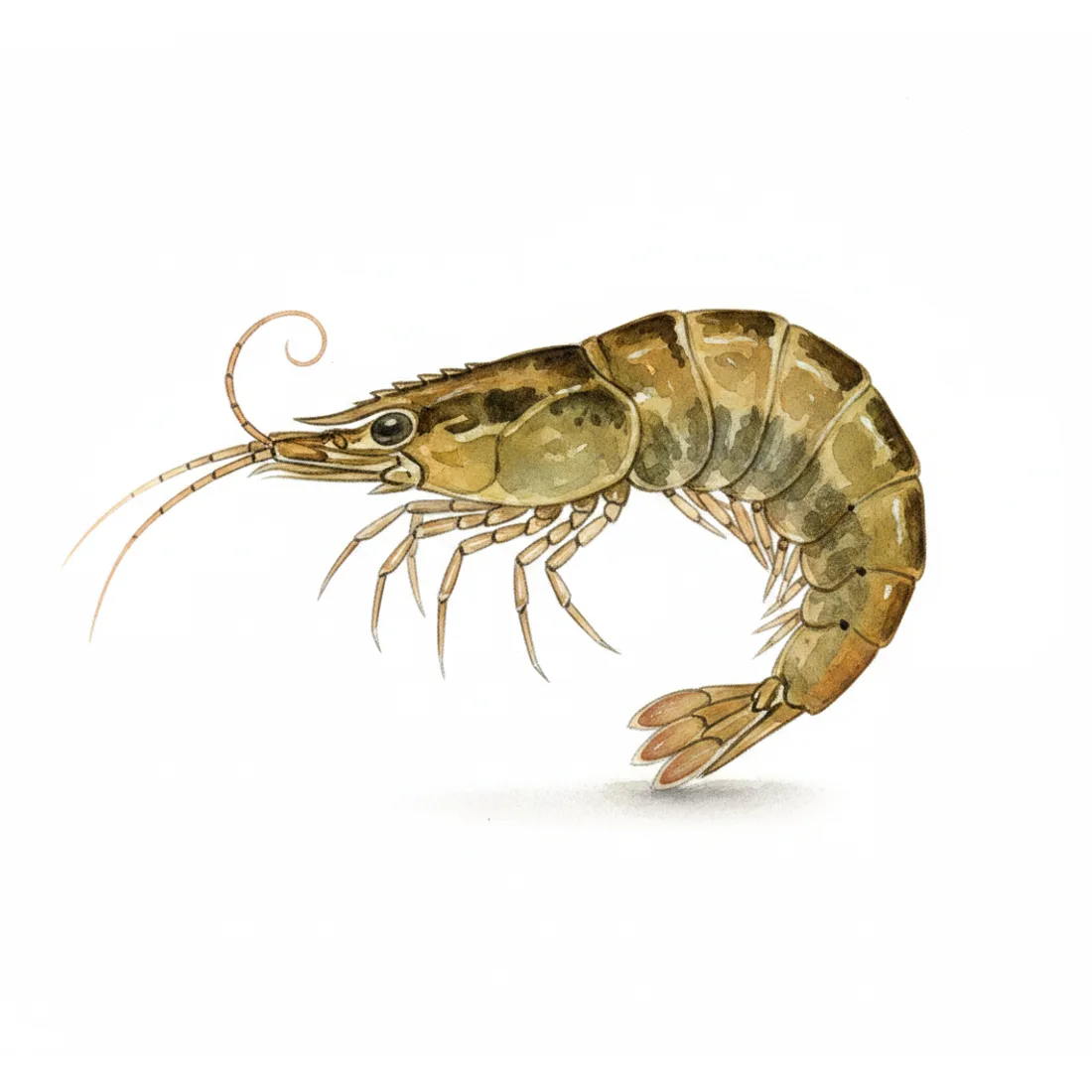
 Illustration· After a photo by Dendrofil (CC BY SA 3.0)
Crustacea — shrimp, hoglouse & daphnia
What it is
Three different food sources sit under this heading — freshwater shrimp (Gammarus), hoglouse (Asellus aquaticus), and daphnia (the pelagic water flea, true zooplankton rather than an insect). Shrimp and hoglouse get reasonably close copies; daphnia cannot be individually imitated, so flies aimed at it read as an impression of the cluster rather than the animal.
Life cycle
Freshwater shrimp (Gammarus spp.)
A year-round bottom food, strongest in cold, early-season water when little else is hatching.
Hoglouse (Asellus aquaticus)
A smaller, slower relative of the shrimp, living among weed and debris — the water slater or aquatic sowbug.
Daphnia (water flea)
True zooplankton, not an insect; it doesn't hatch, it blooms, drifting in dense clouds through open water in warm, settled conditions.
In Ireland
Gammarus is confirmed abundant in Irish fresh water. Daphnia is the defining food of Lough Melvin's sonaghan, described as a genuinely pelagic feeder roaming open water for daphnia, chironomid pupae and phantom-midge larvae; stocked rainbows on put-and-take stillwaters do the same in summer. No fly can copy an individual daphnia (under 2mm) — the Daphnia Lure is honestly logged as an attractor that suggests the cluster rather than the animal.
Flies that imitate this
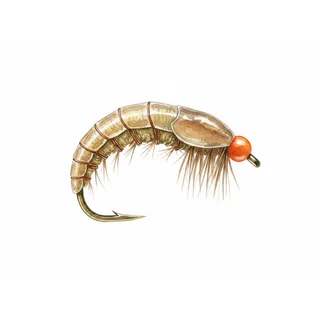
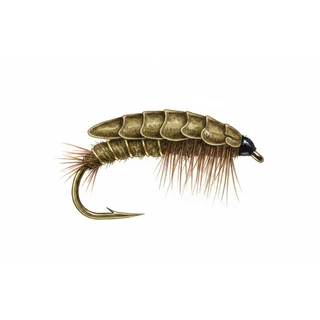
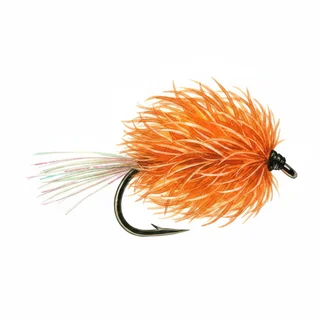
Where it matters
Sources & how we know this (4)
- Gammarus abundance in Irish fresh water
Biodiversity Ireland, Gammarus tigrinus species profile · 2026-07-09 - Asellus aquaticus (hoglouse/water slater) ID, Ireland presence
Wikipedia, Asellus aquaticus · 2026-07-09 - Daphnia description, size, bloom behaviour
Hook and Vice, Solving the Zooplankton Puzzle with Brian Chan · 2026-07-09 - Sonaghan pelagic daphnia/chironomid/phantom-larva feeding
Wikipedia, Lough Melvin · 2026-07-09
Reference compiled from cited sources — Alex's review pass to come.