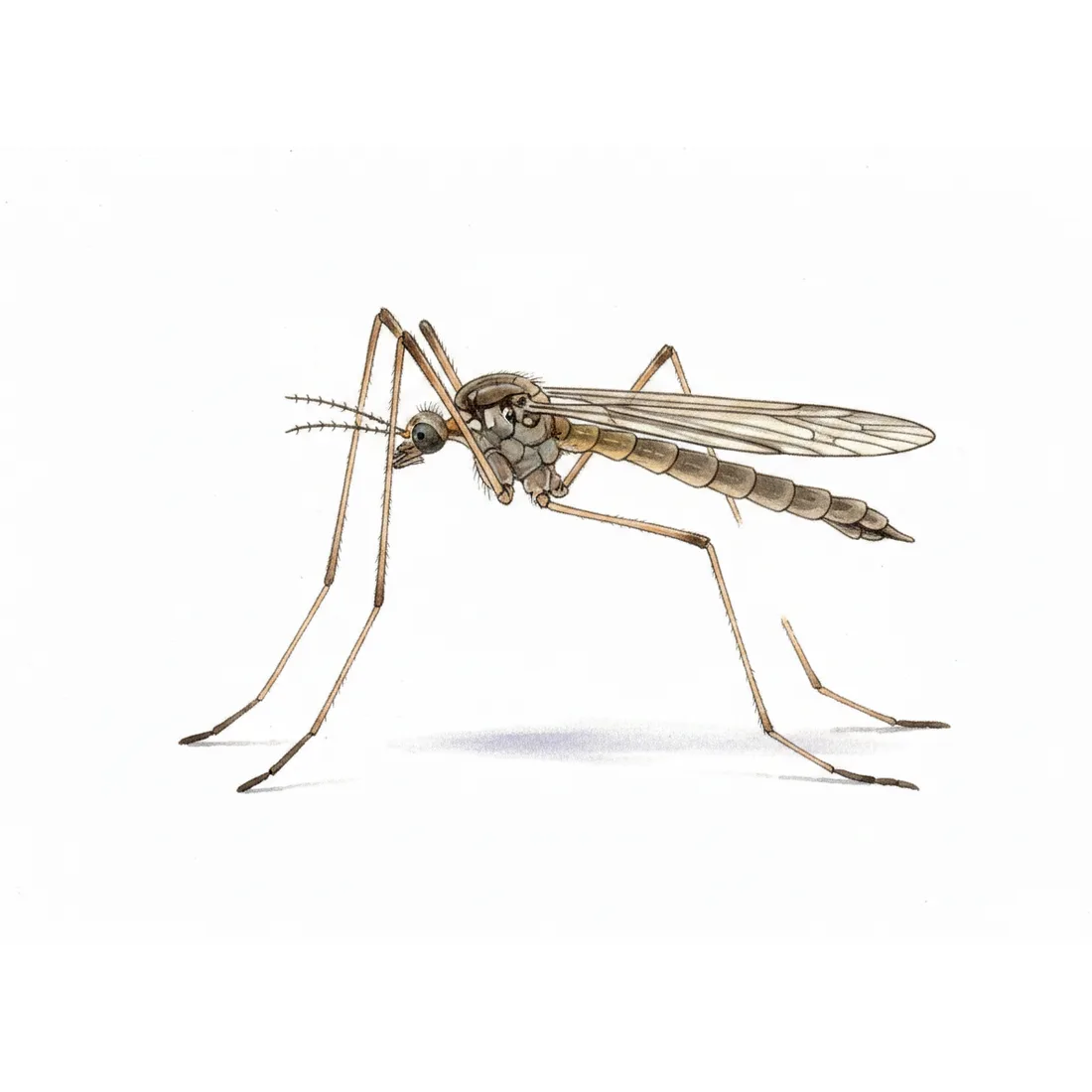
 Illustration· After a photo by Chris Birchill (CC BY 2.0)
Terrestrials & other Diptera
What it is
A scatter of land-bred flies blow onto the water on a schedule reliable enough to fish to: the hawthorn fly, its close relative the heather fly, black gnats, and the daddy-long-legs, plus beetles and flying ants on warm summer days.
Life cycle
Hawthorn fly (Bibio marci)
Hatches in huge swarms around St Mark's Day, 25 April, and is instantly recognisable by its long trailing hind legs.
Heather fly (Bibio pomonae)
A close relative and near look-alike of the hawthorn fly, but hatches July–September and is identified by red thighs.
Black gnat & other small Diptera
Cause selective "smutting" rises, particularly in spring and autumn.
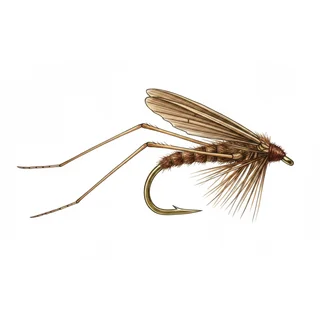
Daddy-long-legs (crane fly, Tipulidae)
Becomes important from late August through October, when windy days blow them onto lough and river; a big-fly, big-fish event since daddies skate helplessly on the surface and pull up trout that normally feed subsurface.
In Ireland
Beetles and flying ants complete the terrestrial picture on warm summer days, though the catalogue currently has no beetle- or ant-specific dry pattern — a minor content gap.
Flies that imitate this
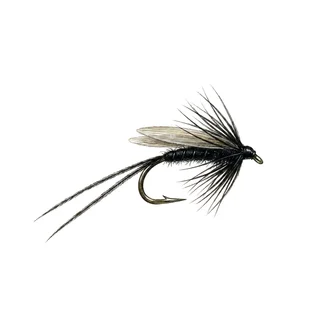
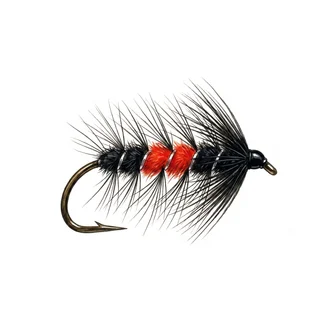
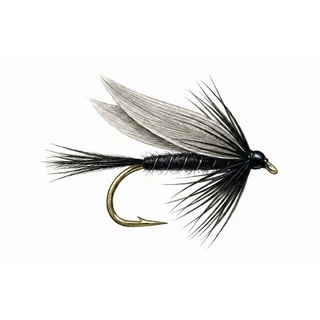
Sources & how we know this (5)
- Hawthorn fly (Bibio marci) St Mark's Day timing, ID
first-nature.com, Bibio marci / Bibio pomonae · 2026-07-09 - Heather fly (Bibio pomonae) July–Sept timing, red thighs
Barbless Flies, Match The Hatch – Hawthorn · 2026-07-09 - Daddy long-legs (crane fly) autumn wind-blown importance
Fulling Mill, Daddy Longlegs or Crane Fly · 2026-07-09 - Black gnat as smutting-rise answer, reed smut/Diptera link
Claretbumbler, Black Gnats · 2026-07-09 - Ants/beetles as steady summer terrestrial trout food
MidCurrent, How to Catch More Trout on Beetles and Ants · 2026-07-09
Reference compiled from cited sources — Alex's review pass to come.